From Operational Losses to 23 Branches: Building the Limko List Retail Management System
Overview
In 2018, I led the product design efforts for the launch of Limko List, starting with three pilot stores. By establishing a scalable operational system and improving visibility across store performance, the product became a growth enabler—contributing to the expansion from 3 to 21 stores over a three-year period.
Problem
This project originated from a critical operational issue faced by a client managing three retail stores, who reported losing hundreds of millions annually due to inventory discrepancies.
After conducting a deep dive into the end-to-end workflow — from stock intake to point-of-sale — I identified a major gap in inter-branch product transfers. There was no structured system to record product movements between Outlet A and Outlet B, especially when one branch requested stock from another.
Additionally, inventory counts were not updated automatically upon sales transactions, resulting in inaccurate stock visibility. As a consequence, the business owner lacked real-time insight into stock levels and financial assets across stores, increasing the risk of loss and misreporting.
Challenge
Building Limko List from the ground up required translating complex retail operations into a scalable digital system across both a web dashboard and mobile application.
The platform was designed to serve multiple user levels — Owners, Store Admins, and Operators — each with distinct responsibilities and access controls. The system needed to accurately reflect real operational workflows, from inventory intake and inter-branch transfers to point-of-sale transactions and financial reporting.
One of the core challenges was balancing diverse user expectations while ensuring seamless implementation in real store environments. Since the product directly impacted day-to-day store operations, usability and accuracy were critical.
Operating within a 5–6 month delivery timeline required focused research, field validation, and disciplined scope prioritization to ensure the system was both practical for store use and scalable for business growth.
My Role
Lead end-to-end design through research, wireframing, interaction design, visual design, prototyping and cross-team collaboration.
I work closely with the Engineering team to understand technical constraints and ensure design quality standards, the Product Manager to identify user requirements and adjust project objectives as the project progresses, and the Customer Success team to better identify areas of user confusion.
Impact
After implementing the system:
0%
Product loss
3 → 23 stores
Branch in three years
The structured, centralized system provided the operational transparency required for sustainable multi-branch expansion.
Implementations (Key Screens)
Manage Product
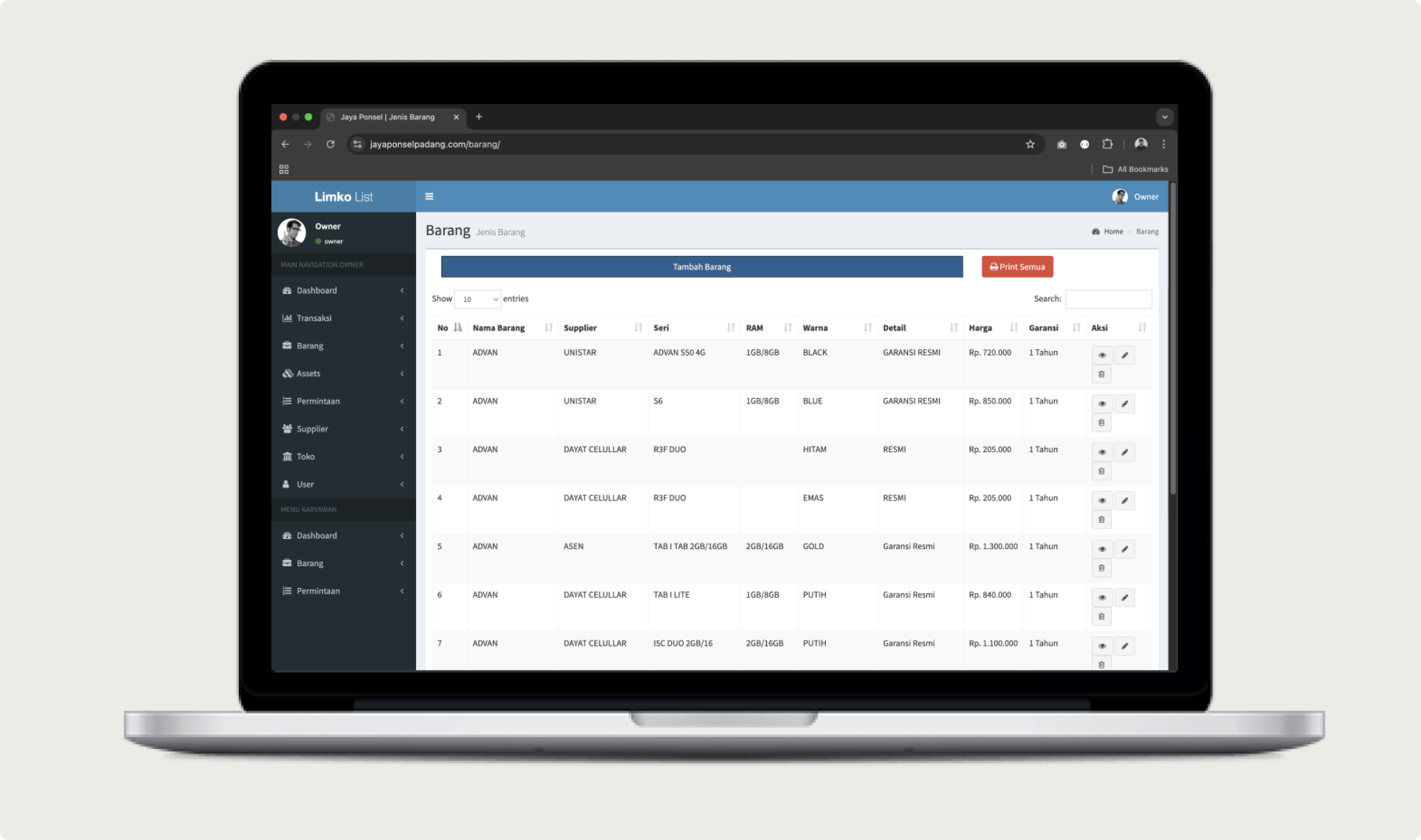
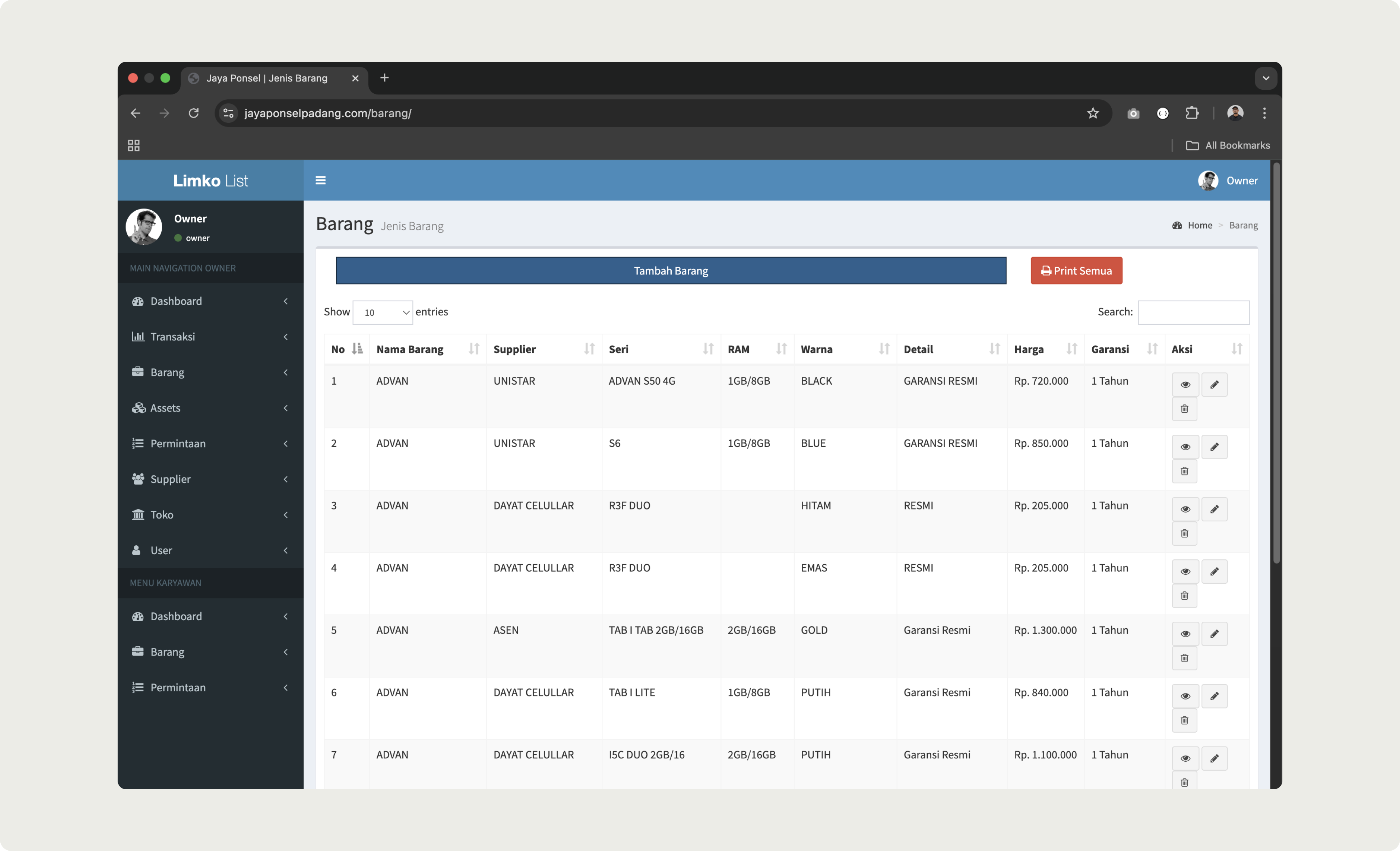
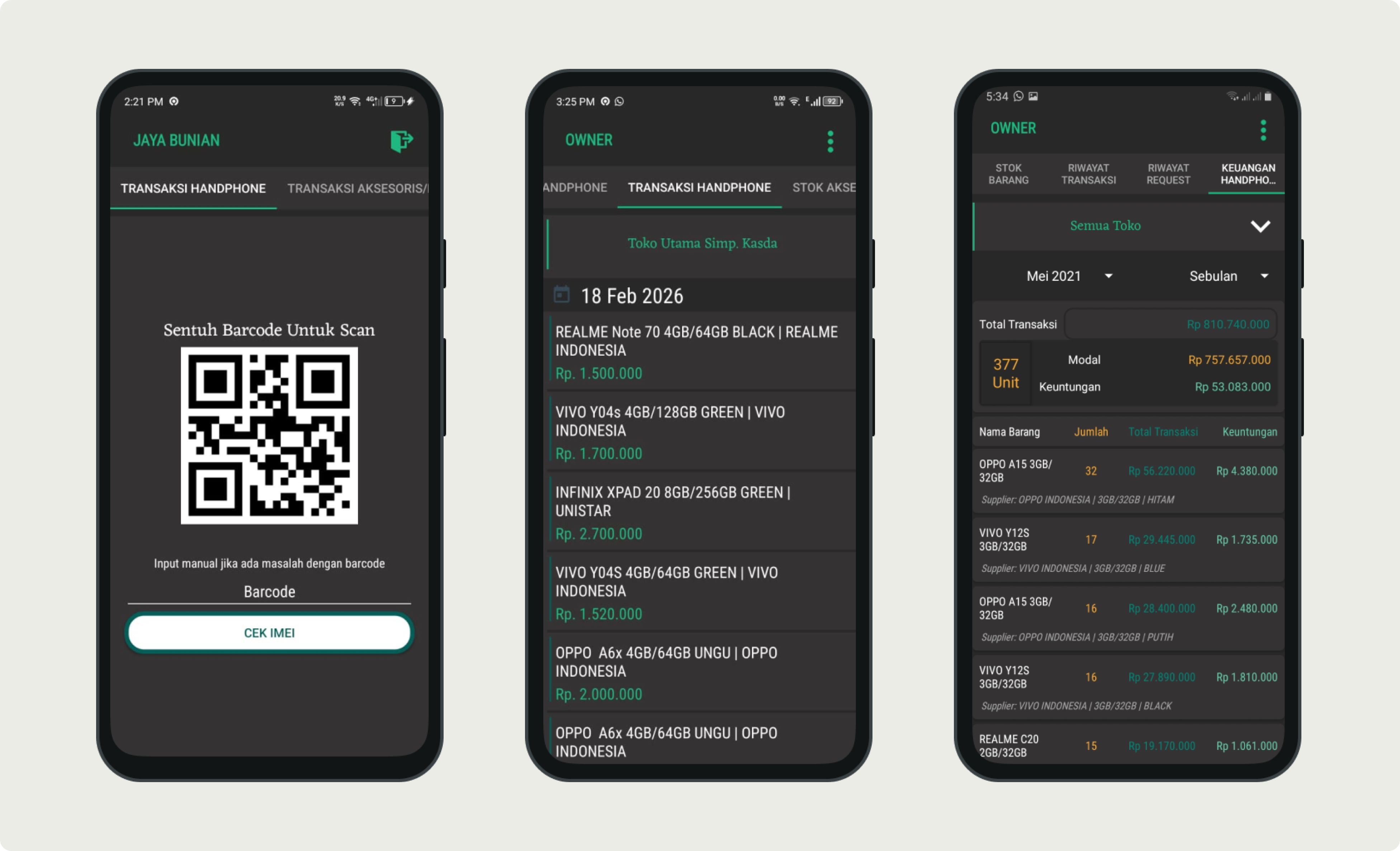
Products can be managed through a web-based dashboard, allowing owners and administrators to add, edit, and monitor inventory data in a structured format.
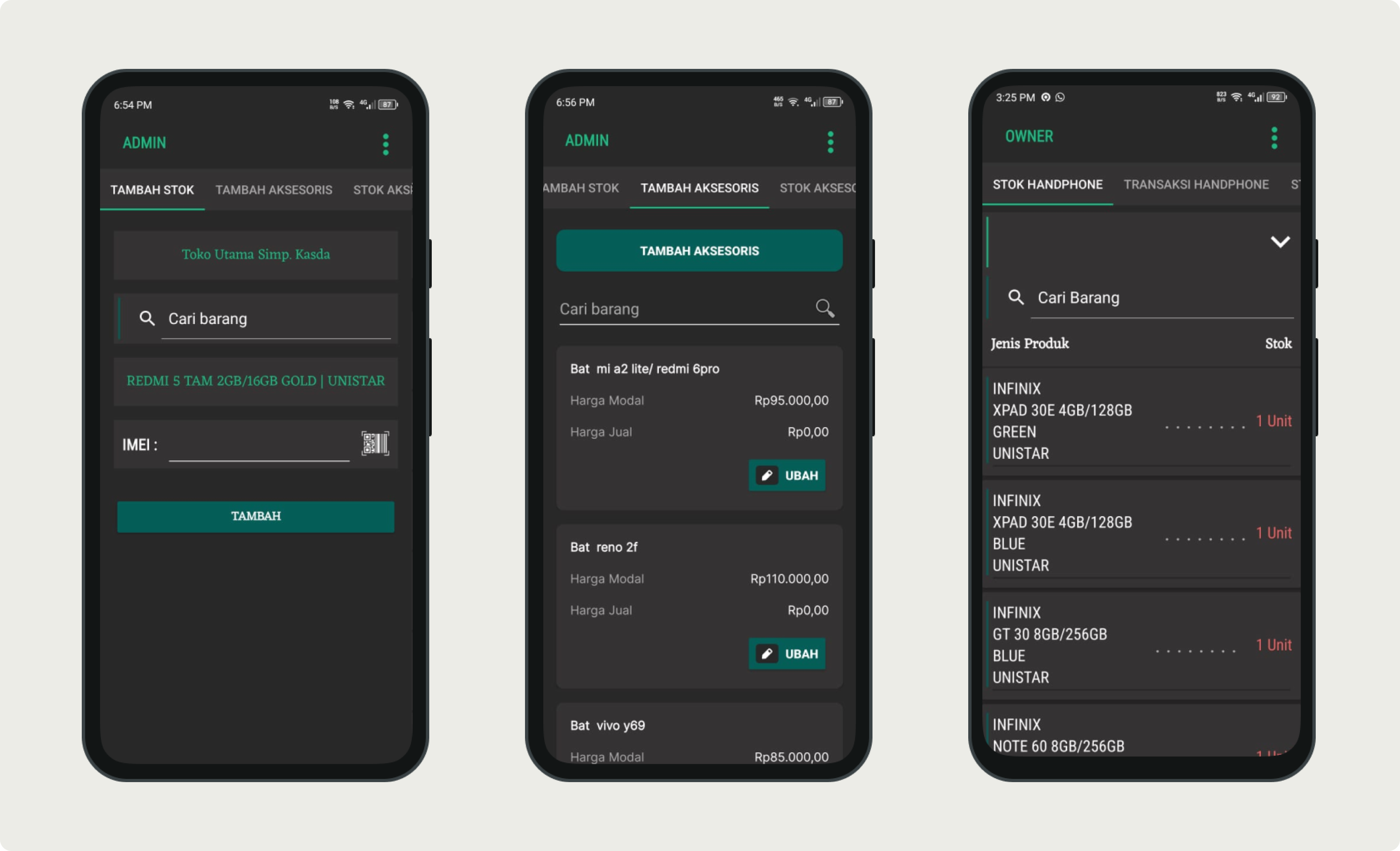
On the operational side, mobile-based IMEI scanning ensures each device is uniquely registered at the unit level. This eliminates ambiguity between identical product models and strengthens asset traceability.
By integrating desktop oversight with mobile field execution, the platform ensures accurate stock tracking from product intake to final sale.
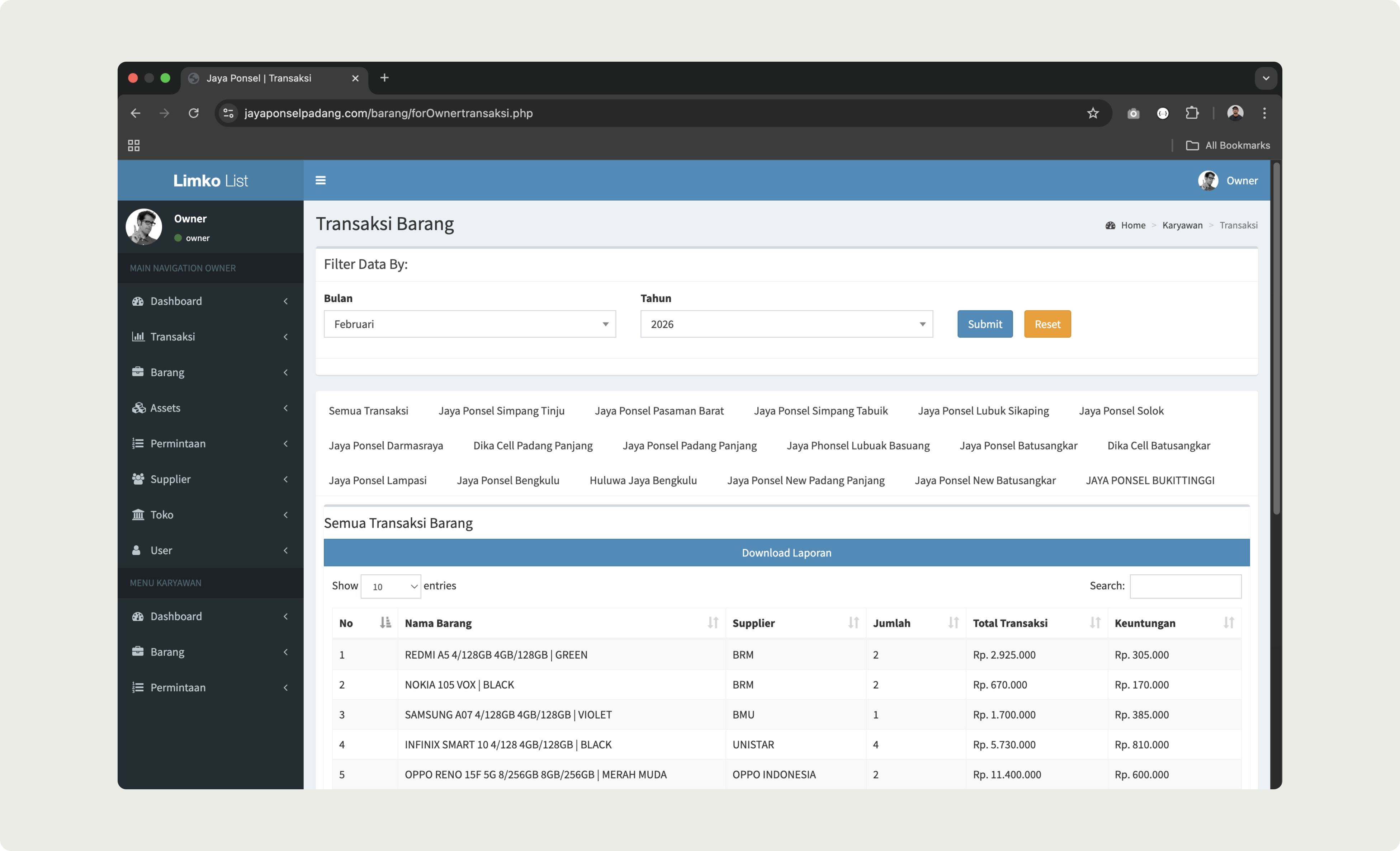
Centralized Transaction Monitoring & Financial Visibility
To support data-driven decision-making, the platform centralizes transaction history across all stores. Owners can filter records by time period and branch, and generate structured financial reports in Excel or PDF format.
The mobile app complements this by providing real-time visibility into sales performance and profitability per product category, enabling quicker operational insights.
Digitizing Inter-Branch Inventory Movement
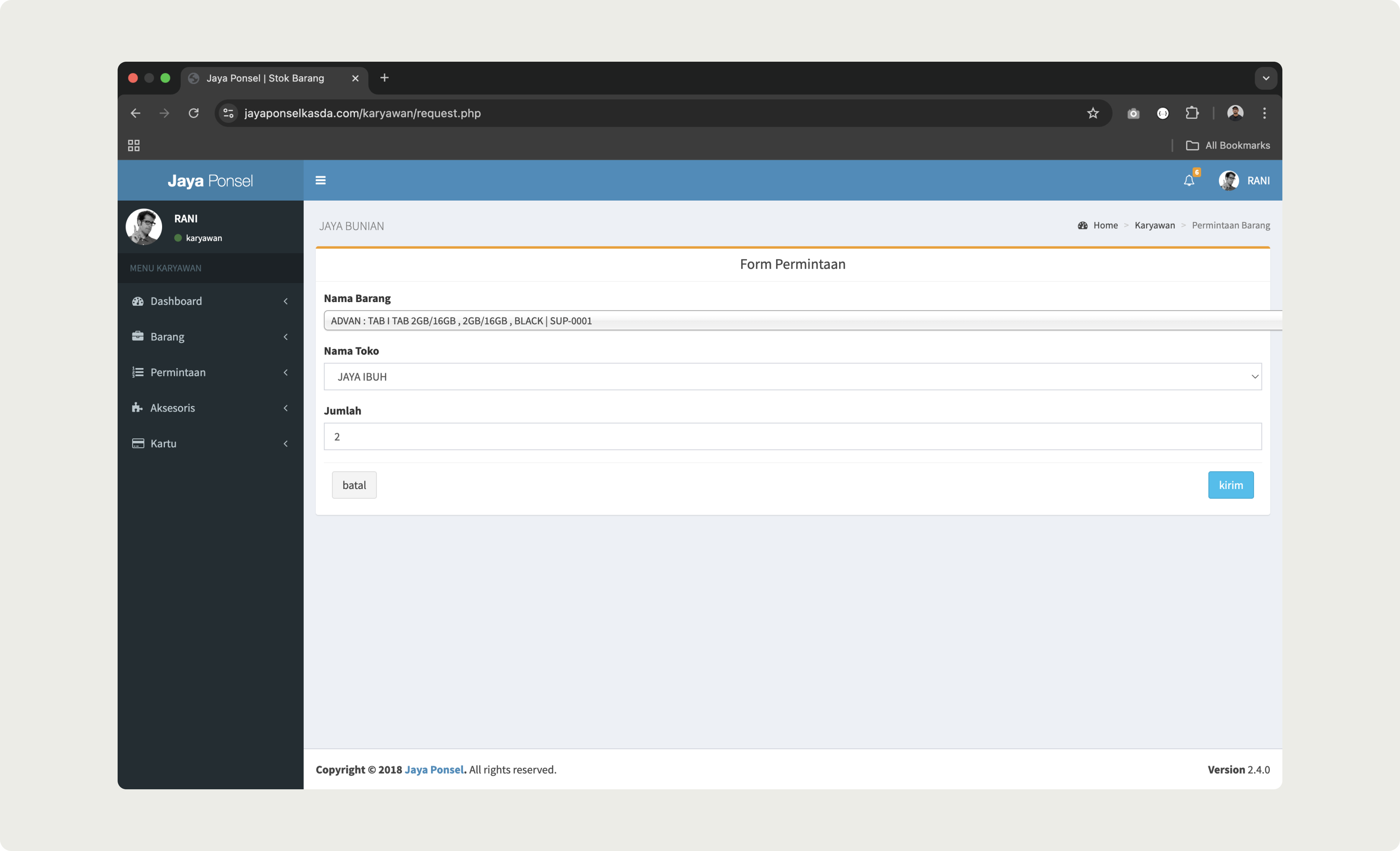
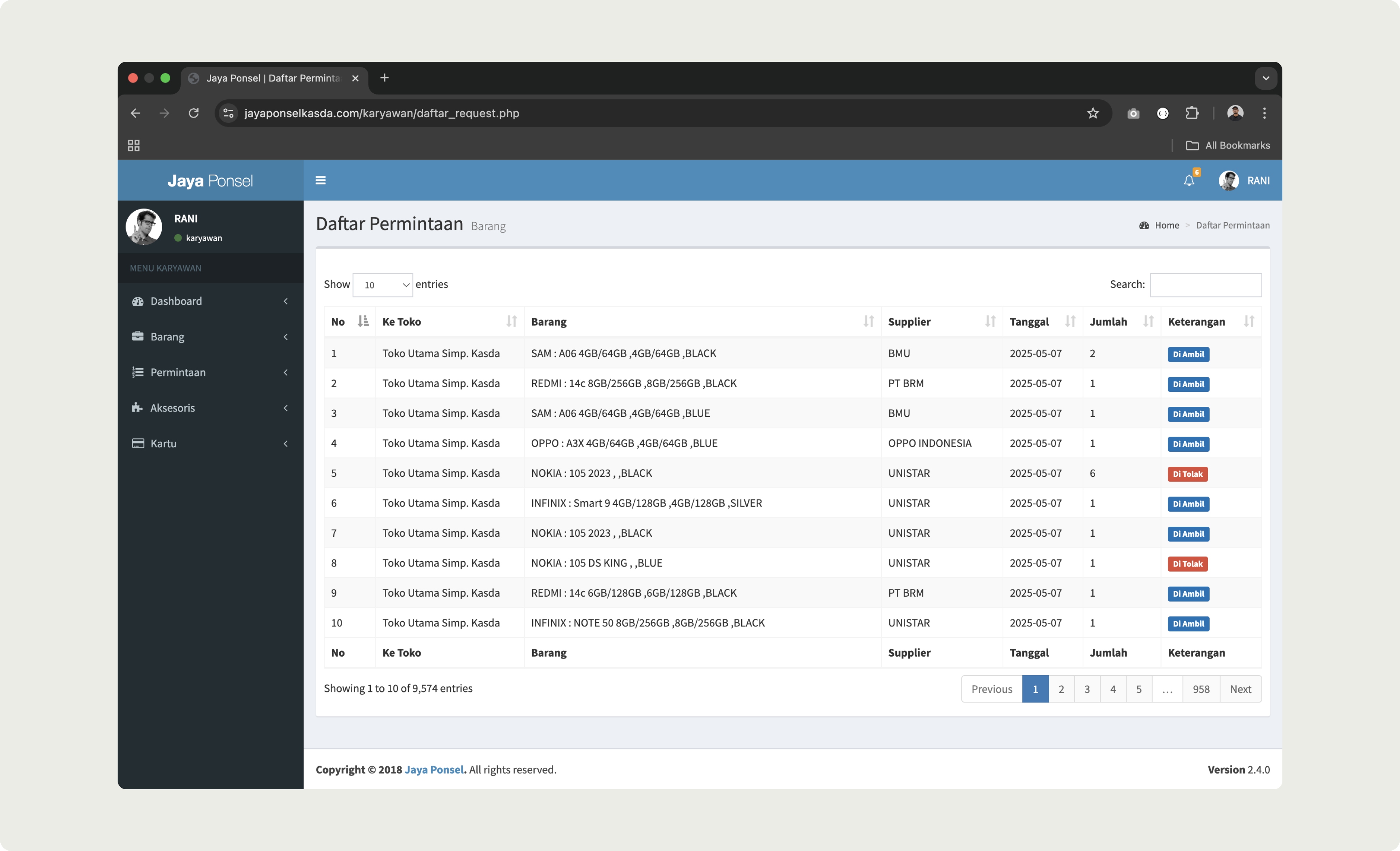
To eliminate untracked stock transfers, a structured request and approval workflow was implemented.
Branches must formally request products from the main store or other branches. Upon approval, the system automatically updates product ownership and inventory data in real time.
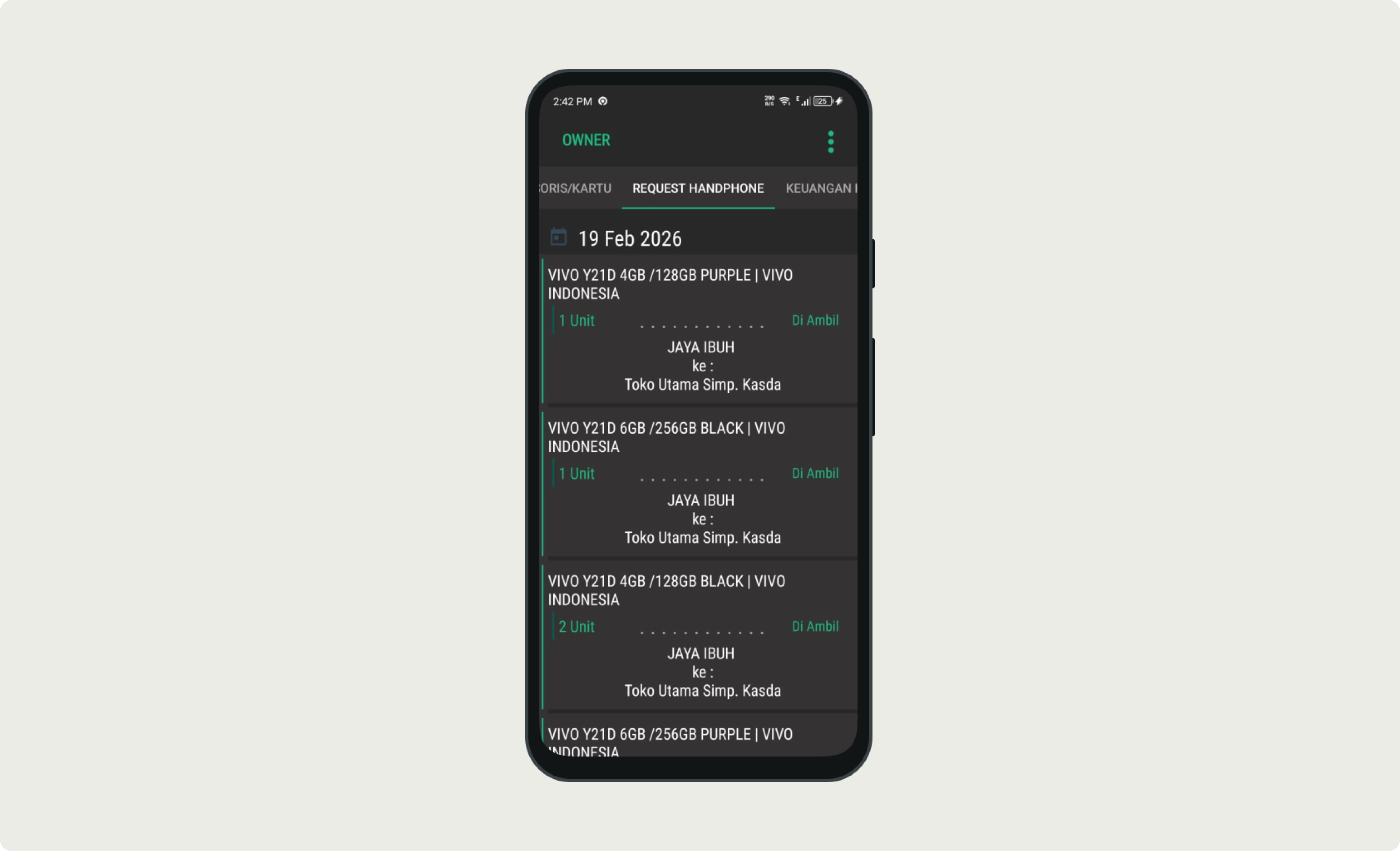
The mobile app also allows owners to monitor transfer updates instantly, maintaining real-time operational visibility.
Impact
After implementing the system:
- Inventory discrepancies were eliminated, reducing annual product loss to 0% within the first year.
- Enhanced operational control enabled scalable growth, supporting expansion from 3 to 23 stores over three years.
0%
Product loss
3 → 23 stores
Branch in three years